Beyond the Standard Commission: High-Value Metalworking Specialties That Build Wealth and Reputation
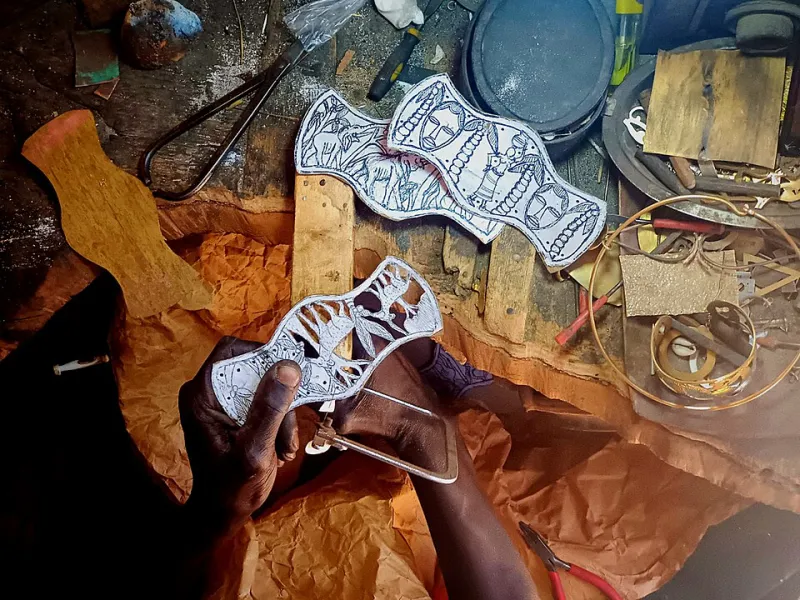
Photo: Wuzyprod, CC BY-SA 4.0, via Wikimedia Commons
There is a ceiling in generalist metalworking, and most craftspeople hit it faster than they expect. You sharpen your skills, build a reliable client base, and find yourself fully booked—yet the hourly rate you are effectively earning has not moved meaningfully in years. The work is good. The business is stable. But stable is not the same as thriving, and the ceiling is real.
The metalworkers who break through that ceiling are rarely the ones who work harder or invest in faster equipment. They are the ones who go narrower and deeper—who identify a specific, underserved need in the market and position themselves as the most qualified person in the region, or the country, to address it. Specialization, executed with intention, is the most reliable path to premium rates in the trades.
Why Specialty Work Commands a Different Conversation
When a client hires a general fabricator, they are purchasing a commodity service. The implicit assumption is that multiple shops could perform the work at roughly comparable quality, and price becomes the primary differentiator. When a client hires a specialist—someone who has demonstrated deep expertise in a particular domain—the dynamic shifts entirely. The question is no longer "how much does this cost?" but "can you do what no one else around here can?"
That shift in framing is worth more than any equipment upgrade. It removes you from price competition and places you in a category where your knowledge, your reputation, and your documented results are the selling proposition. And in several specific metalworking niches, that category is both genuinely underserved and willing to pay accordingly.
Restoration and Conservation Work
Historic preservation is a field with serious money and a chronic shortage of craftspeople who understand metal at a deep technical level. Restoration projects—whether for registered historic buildings, museum collections, or high-end residential properties with significant architectural heritage—require someone who can match period techniques, identify original materials, and execute repairs that are both structurally sound and historically appropriate.
A blacksmith in western Pennsylvania who transitioned from general ornamental work to historic ironwork restoration reported that her average project value increased by more than three times within two years of the shift. The work was not fundamentally more difficult than what she had been doing—but it required documented expertise, an understanding of period construction methods, and the ability to communicate credibly with architects and preservation officers. Those credentials, once established, effectively eliminated her competition.
For metalworkers interested in this path, the State Historic Preservation Offices (SHPOs) in each state maintain lists of approved contractors for federally funded preservation projects. Getting on those lists requires demonstrating technical competence and often completing specific training, but the resulting access to projects—and the rates those projects carry—is substantial.
Heritage Hardware Reproduction
The market for historically accurate architectural hardware is larger and more lucrative than most metalworkers realize. Homeowners restoring Victorian, Craftsman, or Colonial Revival properties often cannot find period-appropriate hardware through commercial channels, and what they can find is frequently of inadequate quality. Custom reproduction work—hinges, latches, escutcheons, door knockers, fireplace accessories—fills that gap at price points that reflect the research, skill, and material quality involved.
What distinguishes successful reproduction specialists is not simply the ability to replicate a form, but the knowledge to replicate it correctly. Understanding how hand-forged hardware differs from cast hardware in both appearance and function, knowing which surface treatments are historically accurate for a given period, and being able to document your process for discerning clients—these capabilities justify rates that purely aesthetic custom work cannot command.
One Virginia-based blacksmith who built a reproduction hardware practice described his typical client as a preservation-conscious homeowner who had already spent $400,000 or more restoring a historic property. For those clients, paying $800 for a pair of historically accurate hand-forged strap hinges is not a difficult conversation. The difficult conversation, he noted, is the one where you explain why a cheaper alternative is wrong for the project.
Bespoke Toolmaking
Among the highest-margin specialties available to skilled metalworkers is the production of custom tools for other craftspeople—woodworkers, leatherworkers, jewelers, surgeons, and chefs among them. The market for bespoke hand tools in the United States has grown considerably over the past decade, driven by the broader revival of interest in craft and by the recognition that production tools, however refined, cannot serve every specific need.
A bladesmith who expanded into custom kitchen knives and chef's tools described the shift in client relationship as the most significant change in his business. General knife orders came through online listings and involved little direct interaction. Custom tool commissions for professional chefs, by contrast, involved consultation, specification development, and follow-up—and generated both higher per-unit revenue and the kind of word-of-mouth referrals that sustain a practice without advertising.
The key to this market is documentation and visibility. Craftspeople who photograph their process, explain their material choices in accessible terms, and publish that content through a professional website and social channels consistently report shorter sales cycles and less price resistance than those who rely on finished-product imagery alone. Clients paying premium prices for bespoke tools want to understand what they are buying and who is making it.
Consultation and Technical Advisory Services
Perhaps the most underutilized revenue stream available to experienced metalworkers is direct consultation. Architects, interior designers, property developers, and even other metalworkers regularly need expert guidance on material selection, finish specification, structural feasibility, and fabrication approach—and many of them have no reliable source for that guidance.
Establishing yourself as a technical consultant does not require a formal credential. It requires demonstrated expertise, a professional presentation, and the confidence to charge for your time at a rate that reflects its actual value. Consultation rates in the trades typically range from $75 to $200 per hour depending on specialization and regional market, and the work involves no material costs, minimal overhead, and no physical output to warrant or repair.
Consultation also serves as a natural pipeline for fabrication work. A designer who brings you in at the specification stage of a project is far more likely to direct the fabrication contract your way than one who encounters your work for the first time when bids go out.
Identifying the Specialty You Already Have
The most important step in this transition is an honest inventory of your existing capabilities. Most metalworkers who have been active in the field for five or more years have developed depth in at least one area that the broader market would value—but that depth is often invisible to them because it has become ordinary through repetition.
Ask yourself where clients most often come to you with problems that others could not solve. Ask where your work has drawn the most specific, technical praise. Ask which projects you find genuinely engaging rather than merely competent. The intersection of those answers is almost always pointing toward a viable specialty.
The craft is already there. The opportunity is in learning to present it differently—and charging accordingly.