Engineered to Endure: The Structural and Geometric Principles Behind Metalwork That Stands the Test of Time
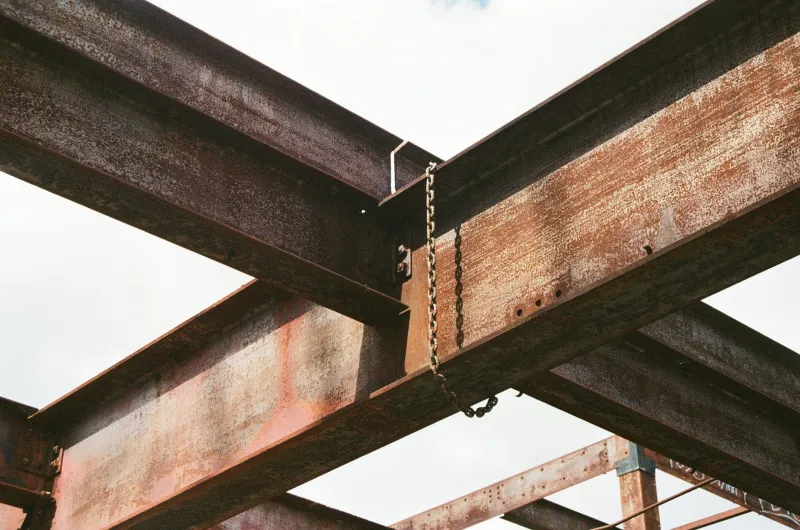
Walk through any historic American city—Philadelphia's ironwork-laced balconies, Charleston's wrought-iron gates, the ornamental railings of New Orleans' French Quarter—and you are looking at metal that has outlasted the people who forged it by two centuries or more. These pieces were not built with computer-aided design software or finite element analysis tools. They were built by craftspeople who understood, intuitively and through hard-won experience, that geometry governs durability.
For the modern metalworker, that intuitive knowledge has been supplemented—and in many cases validated—by structural engineering science. The principles that explain why a cathedral arch has stood for five hundred years are the same principles that determine whether a custom steel staircase will develop a fatigue crack within a decade. Learning to apply those principles deliberately, rather than by accident, is one of the most consequential skills a metalworker can develop.
Load Paths: Where Force Travels Through Your Work
Every structure, whether a bridge or a decorative gate bracket, carries load along predictable routes. Engineers call these routes load paths, and understanding them is fundamental to designing work that does not fail.
When a force—gravity, wind, the weight of a person leaning on a railing—is applied to a metal structure, it does not distribute itself evenly across every weld and joint. It travels along the stiffest available path toward a point of support. If that path runs through a poorly executed weld, an abrupt cross-section change, or a joint that was not designed to carry tension, failure becomes a matter of when, not if.
Practical application begins at the design stage. Before cutting a single piece of stock, a metalworker should trace the anticipated load paths through the proposed design. Where will the heaviest forces concentrate? Which members are in compression, and which are in tension? Compression-loaded members—posts, columns, and struts—tolerate material imperfections relatively well. Tension-loaded members—tie rods, hanger brackets, and suspension elements—are far less forgiving. A small crack or inclusion in a tension member can propagate rapidly under cyclic loading.
For ornamental work, this analysis need not be exhaustive or mathematically rigorous. Even a rough mental model of where forces travel will reveal obvious vulnerabilities before they become expensive repairs.
The Power of Triangulation
Among all geometric forms available to the metalworker, the triangle is unrivaled for structural efficiency. Unlike a rectangle, which deforms into a parallelogram when racked by lateral force, a triangle cannot change shape without changing the length of its sides. That rigidity is the foundation of virtually every durable structure humans have built, from medieval timber-frame barns to modern steel bridges.
In practical metalworking terms, triangulation means incorporating diagonal bracing wherever a structure must resist lateral load. A square gate frame without diagonal members will rack and distort over years of use. Add a single diagonal bar—or better, a pair forming an X—and the structure becomes dramatically stiffer without adding significant weight or material cost.
Gussets serve a related function at joints. A welded corner joint between two square tube members carries bending stress at the weld toe, a notoriously vulnerable location. Add a triangular gusset plate at that corner, and the bending moment is converted into axial force distributed across a larger weld area. The joint becomes both stronger and more fatigue-resistant. This is why gussets appear in everything from highway sign structures to custom furniture fabricated in American metal shops.
Cross-Section Geometry and Moment of Inertia
The shape of a metal member's cross-section has a profound effect on its ability to resist bending, and this is where geometry becomes genuinely mathematical. The relevant property is the moment of inertia—a measure of how efficiently a cross-section's material is distributed relative to its neutral axis.
A solid square bar and a hollow rectangular tube of equal weight will not perform equally in bending. The tube, with its material concentrated away from the neutral axis, will be significantly stiffer and stronger in flexure. This is why structural engineers specify wide-flange I-beams rather than solid rectangular bars for spanning applications, and why metalworkers who understand this principle reach for tube stock rather than solid bar when designing shelving brackets, cantilevered supports, or gate frames.
For ornamental applications where solid stock is preferred for aesthetic reasons, the same principle suggests orienting rectangular bar stock with its larger dimension in the direction of bending. A flat bar set on edge resists vertical load far more effectively than the same bar laid flat—a fact that experienced smiths have applied for centuries in forging structural scrollwork and decorative brackets.
Stress Concentration: The Hidden Enemy of Longevity
Geometric discontinuities—sharp corners, abrupt cross-section changes, notches, and holes—concentrate stress. In a uniformly loaded member, stress is distributed evenly across the cross-section. At a sharp inside corner, that stress can be multiplied by a factor of two, three, or more, depending on the geometry. In cyclic loading conditions—vibration, repeated impacts, thermal expansion and contraction—those concentrated stresses initiate fatigue cracks that grow with each load cycle until the member fractures.
The remedy is generous radii. Inside corners should be radiused wherever structurally possible. Holes should be placed away from high-stress regions. Cross-section transitions should be gradual rather than abrupt. These are not merely aesthetic preferences; they are engineering decisions with direct consequences for service life.
Historic ironwork demonstrates this principle beautifully. Examine the scrollwork on a nineteenth-century American gate, and you will rarely find a sharp inside corner. The graceful curves that give traditional ironwork its visual character are also, not coincidentally, the curves that distribute stress efficiently and resist fatigue failure over generations of use.
Applying Engineering Insight Without an Engineering Degree
None of the foregoing requires a structural engineering credential to apply. What it requires is a habit of thinking about force before reaching for the torch.
Several practical habits serve metalworkers well in this regard. First, sketch the load path before finalizing any design intended to carry significant structural load. Second, default to triangulated bracing in any frame that must resist lateral force. Third, specify hollow sections over solid ones when weight efficiency matters, and orient rectangular stock to maximize its section modulus in the direction of primary bending. Fourth, eliminate sharp inside corners wherever fatigue resistance is important—and assume it is always important in any piece intended to last.
For metalworkers who want to deepen their structural intuition, resources are readily available. The American Institute of Steel Construction publishes accessible references on steel design, and community college courses in statics and mechanics of materials provide a rigorous foundation that pays dividends across an entire career.
The Craft Tradition and the Engineering Tradition Are the Same Tradition
It is tempting to frame structural engineering knowledge as something separate from—or even in tension with—traditional craft. In practice, the two traditions converge on the same conclusions. The master smiths who forged the ironwork now considered American heritage were not operating without structural understanding; they were operating with structural understanding encoded in apprenticeship, guild knowledge, and generations of observed failure.
Modern metalworkers have access to that accumulated knowledge plus a century of formal engineering science that explains why the old rules worked. Combining both is not a concession to modernity. It is the fullest expression of a craft that has always been, at its core, the disciplined application of human intelligence to the challenge of making things that last.
The geometry of strength is not a new discovery. It is an old truth, newly legible.